


How to Price Your Home Right in a Competitive Market?

Pricing your home is the most important decision you'll make when you sell. Get it right, and you could trigger a bidding war that drives the final sale price well beyond your expectations. Get it wrong, and your home could linger on the market, forcing you into a series of stressful price cuts.
So, what’s the secret to finding that magic number? It's less about your gut feeling and more about a strategic, data-driven approach.
Step 1: Understand Your Home's True Market Currency
Your home's value isn't based on what you paid for it or how much you've invested in renovations. It's based on what a willing buyer in today's market is prepared to pay. This is why the first and most crucial step is to analyze comparable sales.
Your agent will provide a comprehensive report showing what similar homes in your immediate area have sold for in the last few months. This is your foundation. Pay close attention to:
- Location: How close were the homes sold to yours?
- Size & Features: Were they similar in square footage, number of bedrooms, and lot size?
- Condition: Were they recently updated or in need of work?
These sales are the historical proof of your home's worth. Anything else is just speculation.
Step 2: The Psychology of the "Honeymoon Period"
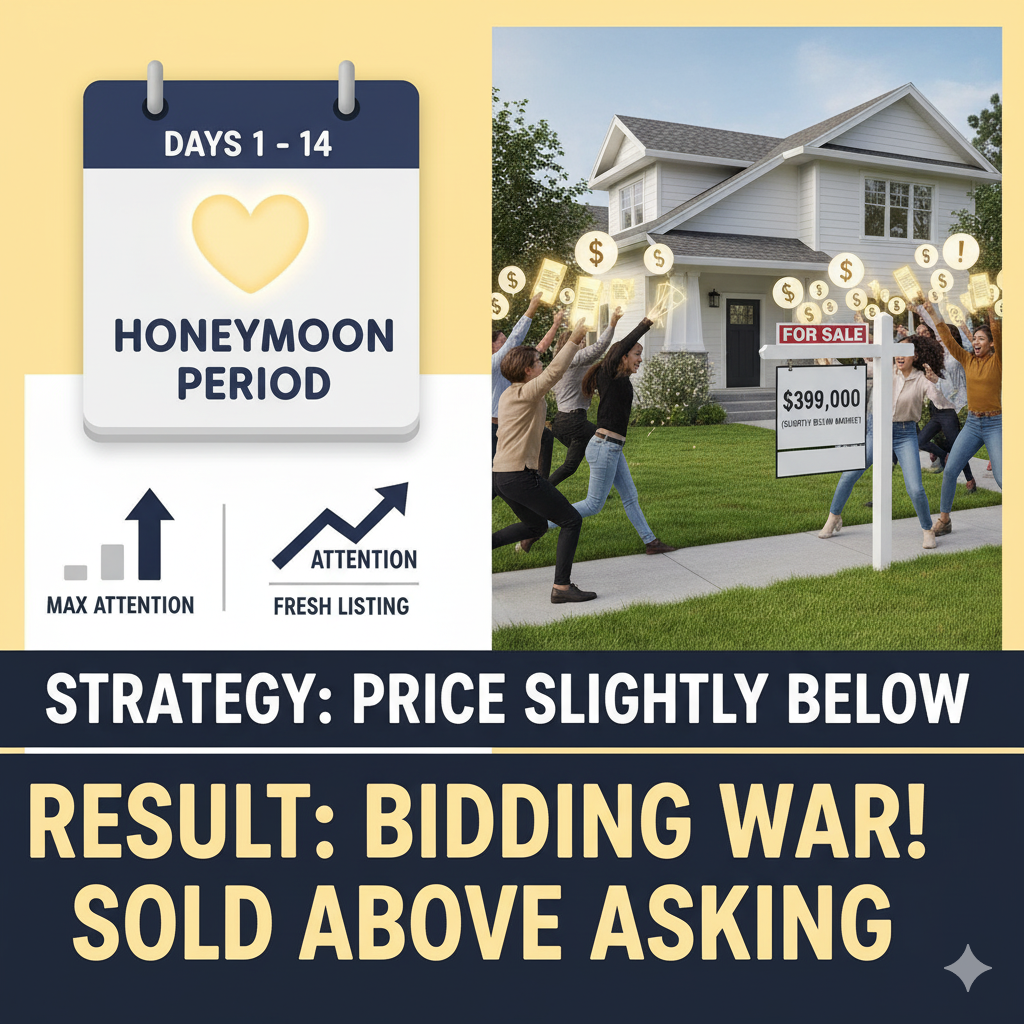
When your home first hits the market, it enters its ‘honeymoon period’ the first 14 days when it gets the most attention from potential buyers and their agents. This is your chance to make a powerful first impression and generate maximum interest.
The best strategy is to raise your home at or slightly below its market value. This might sound like you’re leaving money on the table, but it’s a brilliant way to create a bidding war. A slightly under-market price creates a sense of urgency and value, drawing in multiple qualified buyers who see an opportunity. The resulting competition can quickly drive the offers above the asking price, leading to a far better outcome than if you had overpriced it from the start.
Step 3: Account for the Intangibles
Once you have a baseline price from comparable sales, you can fine-tune it based on the unique qualities of your home and the current market. Does your home have exceptional curb appeal, stunning natural light, or a highly sought-after floor plan? These are features that can nudge the price upward.
Conversely, is the market experiencing a recent rise in interest rates, or is there a sudden influx of new listings? These broader trends can affect buyer confidence and may require a more cautious pricing approach. A great real estate agent will help you read these market signals and adjust your strategy accordingly.
The Biggest Mistake to Avoid: Overpricing
When you overprice a home, it sends a clear message to the market that you don’t understand its true value. Your home will get far fewer shows, and the few buyers who do see it will likely dismiss it as a bad deal. Over time, your listing will become "stale," and when you eventually lower the price, buyers will become suspicious, wondering what’s wrong with the property. It's a vicious cycle that almost always ends in a lower final sale price.
Trust the data, trust your agent, and trust the process. Pricing your home right from the very beginning is the most profitable move you can make.
Recent Posts




"My job is to find and attract mastery-based agents to the office, protect the culture, and make sure everyone is happy! "